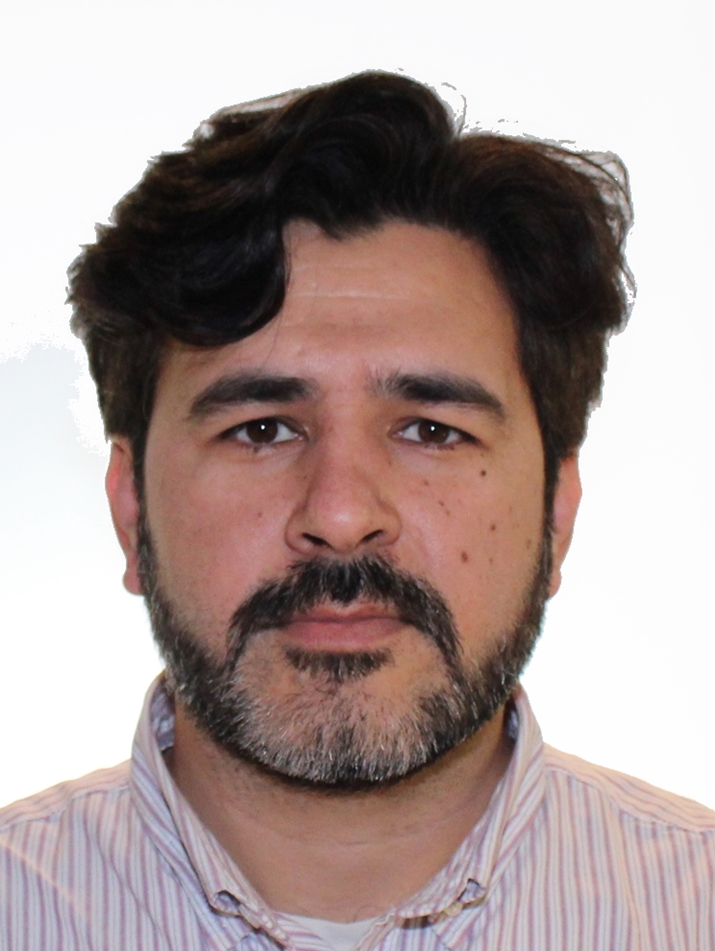
Dr. Ihsan Ullah did his Ph.D. in the University of Milan, specializing in designing lightweight deep neural network architectures with the pyramidal approach. He has more than nine years of research and development experience in applying Deep Learning to a variety of images, video, text, and time-series recognition problems while working with renowned labs in the US (Computational Vision and Geometry Lab at Stanford University), Europe (at CVPR Lab at the University of Naples Parthenope, Italy), and the Middle East (Visual Computing Lab in King Saud University, Saudi Arabia). Before joining the School of Computer Science in NUI Galway, he was a Senior Research Data Scientist in CeADAR Irelands Centre for Applied AI in University College Dublin where he was the head of the Special Projects group and was actively involved in applying for various national and international fundings e.g., Horizon Europe, SFI, EI. Prior to that, he worked in Data Mining and Machine Learning Group of School of Computer Science in NUI Galway as a Senior Postdoc, Adjunct Lecturer, and Project Manager of the H2020 project ROCSAFE. He also worked as a Postdoc at INSIGHT Research Centre in NUI Galway and Research Engineer in Prosa Srl Italy.
He was an invited member of the National Standards Authority of Ireland prestigious Top Team on setting the national Standards in AI, and was a steering committee member of Oblivious.ai. Dr. Ullah’s (IEEE Member) research primarily focuses on the development of lightweight Deep Neural Network architectures, including Pyramidal Neural Networks and Convolutional Neural Networks (CNNs). His broader areas of expertise encompass computer vision, pattern recognition, explainable AI, federated learning, and differential privacy.
At present, Dr. Ullah is engaged in research on medical image analysis covering classification, segmentation, automated report generation, as well as privacy-preserving action and activity recognition from videos, object detection and tracking, EEG signal classification, augmented reality, and the responsible use of AI. He is also currently working on depth estimation and anomaly detection for autonomous vehicles, and on developing an adaptive cybersecurity system.
CyberVehiCare Privacy Policy.
At CyberVehiCare, we respect your privacy. We want to ensure that you get the information, content, and experiences that matter most to you. CyberVehiCare is committed to protecting the privacy of its members, customers, volunteers, and other contacts.